
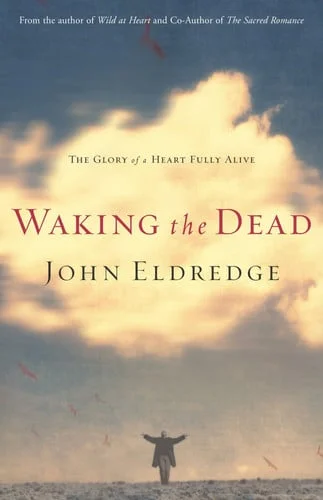
Waking the Dead: The Glory of a Heart Fully Alive
by Eldredge, John · 2003
Own this book?
Catalogue it in your own library: where it is shelved, what you paid, who has borrowed it.
Start your libraryAlready have one? Sign in
Description
There is a glory to life that most people-including believers-never see. In this insightful new book, John Eldredge presents the heart as central to life. Not only is the heart essential; the heart God has ransomed is also good. Building on these foundational truths, Eldredge shows readers why real Christianity is a process of restoration, where the broken parts of our hearts are mended and the captive parts are set free.
Waking the Dead leads listeners to understand how to live from the heart, care for their heart like the treasures of the kingdom, and give from fullness instead of emptiness. This message also shows how living from the heart can energize people to love God and others in a way they've never experienced, revealing to them life's purpose: fighting for the hearts of others.
Editorial Reviews
From Publishers Weekly Eldredge, who helped to redefine the Christian men's movement with Wild at Heart, broadens his scope to offer this more general spirituality title on being "fully alive." Such a state of total animation is achieved only when Christians can integrate all four "streams" of their lives: discipleship, counseling, healing and warfare. (This last part may surprise some readers, but Eldredge insists that awareness of spiritual warfare actually "may be the most critical" aspect of being fully alive.) Throughout, he argues that there is glory hidden in each Christian's heart, an echo of how Christ has "ransomed and restored" every person. The goal, then, is to capture and maintain a sense of liberation from that restoration. Eldredge fans will find that he has not departed much from the formula that made Wild at Heart so successful; he culls examples from popular culture (The Perfect Storm, The Matrix, The Lord of the Rings, The Wizard of Oz) and tells vivid stories from his own experience. Despite the careful formula, the book rarely feels formulaic; it has an unguarded heart and an opinionated lucidity that may surprise readers. Eldredge is honest about the fact that life can be arduous, confusing and filled with despair, but he also affirms a deep Christian hope. Established Eldredge fans will be pleased with this new offering, and it will gather some new readers, especially women. Copyright 2003 Reed Business Information, Inc.
About the Author John Eldredge, bestselling author of Wild at Heart, The Journey of Desire, and coauthor of The Sacred Romance with the late Brent Curtis, is a counselor and lecturer. For twelve years he was a writer and speaker for Focus on the Family, most recently serving on the faculty of the Focus on the Family Institute. Now John is director of Ransomed Heart¬ô Ministries, a teaching, counseling, and discipling fellowship devoted to helping people recover and live from their deep heart.
John lives in Colorado Springs with his wife, Stasi, and their three sons. He loves living in Colorado so he can pursue his other passions, including fly-fishing, mountain climbing, and exploring the waters of the West in his canoe.
Excerpt. Æ Reprinted by permission. All rights reserved. chapter one Arm Yourselves The thief comes only to steal and kill and destroy; I have come that they may have life, and have it to the full. -Jesus of Nazareth (John 10:10) We and the world, my children, will always be at war. Retreat is impossible. Arm yourselves. -Leif Enger We were running low on fuel, and still the fog refused to lift. Icy Straight spread out below us, beautiful and threatening. Iíve always loved the ocean, the wilder the better. But clearly, this was no place to run out of gas. If by chance we survived ditching the small plane, weíd last about seven minutes in those waters. The nearest chance at rescue lived more than forty minutes away. Great. This is just how it happens, I thought. Weíll make Readerís Digest. "Family on vacation lost in fatal crash.î Rain and mist smeared the windshield as we strained our eyes ahead, searching for a break in the clouds. Thereís no radar in these planes; bush pilots fly VFR-visual flight restrictions. If you canít see where youíre going, well, then, mister, you canít go there. And you canít keep trying forever, either; the clock thatís running is the fuel gauge. Three more minutes, and weíll have to turn back. "Weíll give it one more pass.î "Fairweather Mountainî is a total misnomer. With a name like that, donít you picture some lovely place in Hawaii or maybe Costa Rica-balmy breezes, gentle green slopes, the weather always, well, fair? These mountains explode 15,000 feet or more above sea level, right off the coast of southeastern Alaska, sheer cliffs and foreboding glaciers. Some of the worldís worst weather hangs out here. The pilot was yelling above the drone of the engine, "They get their name ícause you can only see íem in fair weather.î How cute. What idiot came up with that cleverness? Raw fear had swallowed my sense of humor whole. They ought to have named them the Peaks of Frozen Death or the Donít Even Think About It Mountains. Fair weather? Around here, that means maybe twenty days a year-if youíre lucky. We got lucky. And I have never seen anything more breathtaking in all my life. We banked along vertical granite walls that rose and fell thousands of feet on either side, like a sparrow gliding among the Himalayas. "Are those waterfalls?î I asked, pointing to several cascades of white falling through thin air over the black cliffs. "Avalanches. It must be warm up here today.î Massive crevasses in the glaciers below held pools of clear water-a color I never knew existed, something between azure and cerulean blue. "Those cracks are so big we could fly right down íem.î I pretended not to hear. I felt weíd slipped through Deathís grasp, and I didnít want to give him another swipe. The beauty that now engulfed us was enough. In Desperate Need of Clarity Twenty clear days a year-that sounds about like my life. I think I see whatís really going on about that often. The rest of the time, it feels like fog, like the bathroom mirror after a hot shower. You know what I mean. What exactly are you perfectly clear on these days? How about your life? Why have things gone the way they have? Where was God in all that? And do you know what you ought to do next, with a deep, settled confidence that it will work out? Neither do I. Oh, Iíd love to wake each morning knowing exactly who I am and where God is taking me. Zeroed in on all my relationships, undaunted in my calling. Itís awesome when I do see. But for most of us, life seems more like driving along with a dirty windshield and then turning into the sun. I can sort of make out the shapes ahead, and I think the light is green. Wouldnít a little bit of clarity go a long way right now? Letís start with why life is so dang hard. You try to lose a little weight, but it never seems to happen. You think of making a shift in your career, maybe even serving God, but you never actually get to it. Perhaps a few of you do make the jump, but it rarely pans out the way you thought. You try to recover something in your marriage, and your spouse looks at you with a glance that says, "Nice try,î or "Isnít it a little late for that?î and the thing actually blows up into an argument in front of the kids. Yes, we have our faith. But even there-maybe especially there-it all seems to fall rather short of the promise. Thereís talk of freedom and abundant life, of peace like a river and joy unspeakable, but we see precious little of it, to be honest. Why is it that, as Tillich said, itís only "here and there in the world and now and then in ourselvesî we see any evidence of a new creation? Here and there, now and then. In other words... not much. When you stand them side by side, the description of the Christian life practically shouted in the New Testament compared with the actual life of most Christians, itís... embarrassing. Paul sounds like a madman, and we look a little foolish, like children whoíve been held back a grade. Why is it that nearly every good thing, from taking the annual family vacation to planning a wedding to cultivating a relationship, takes so much work? Itís almost as if there is something set against us. Shell ShockSome dear friends of mine just returned from a three-week vacation in France. It had been their dream for nearly twenty-five years. What could be more romantic than strolling the Champs …lysÈes in the evening, as lovers do? It seemed an ideal way to celebrate their twenty-fifth wedding anniversary. Theyíd both served God faithfully for decades, but over the years a European rendezvous seemed about as reachable as the moon. Then, late last fall, things suddenly came together. Friends of theirs were headed to Europe and offered two tickets to come along. Time off was available. They were going to France. And right after they made it to Paris, it all fell apart. Craig came down with walking pneumonia; Lori wanted to leave the third day. All sorts of issues in their marriage surfaced, but since they were with friends, the issues mostly played themselves out in their own thoughts-which tended toward divorce. It wasnít romantic; it was hard. Afterward, as we talked on the phone about the whole thing, Lori said, "Life never seems to turn out the way you think it will, about 90 percent of the time.î No kidding. Havenít we all got a story that goes with that little bumper sticker? Just the day before, I received another call. That was the morning our son Blaine was to have his final cardiologist appointment, and I was anxious to hear the news. Now, I know that every parent thinks his child is head and shoulders above the rest, but Iím telling you-Blaine is a special one. He turned eleven this year, and heís one of the healthiest, happiest kids Iíve ever known. His heart is so good, so spiritually aware, so keen to the hearts of others. Heís surprisingly compassionate for a boy his age, and heís also the most courageous one of us all. When it comes to rock climbing or cliff jumping or skiing, Blaine is always the first to go for it. Heís a great athlete and a talented artist and a riot when it comes to his humor. He plays the violin; he memorizes cowboy poetry; he blows stuff up; he wants to be a Jedi knight. I love this boy. And itís a long story of prayer and hope and worry over Blaine. When he was young, his pediatrician picked up an anomaly in his heart during a routine checkup. The cardiologist confirmed through a battery of tests that, indeed, Blaine had several holes in his heart. "Heíll need surgery,î he said. We opted to wait until Blaine was older, to give God a chance to intervene. The thought of putting my son under open-heart surgery gave me the shudders. Over the course of those years we spent many nights in prayer that God would heal Blaineís heart. During one of those times, Stasi, not usually given to visions, had a picture of a light penetrating his heart. At that moment, she felt certain God had healed him. And just this morning, the day for his annual checkup, as I began to pray for Blaine, I sensed Jesus say, Iíve healed him. My heart rested, and I waited for the good report. "Hi... itís me.î A long silence. "Blaine needs surgery... right away.î Hope vanished. I felt that sick-in-the-gut feeling of an imminent free fall, that feeling you get on top of a ladder thatís starting to sway under you. All kinds of thoughts and emotions rushed in. What? Oh, no... Not after all this... I... I thought... My heart was sinking. Despair, betrayal, abandonment by God. Failure on our part to pray enough or believe enough. I felt moments away from a total loss of heart. It seemed inevitable. These moments arenít a rational, calculated progression of thought; theyíre more like being tossed out of a raft in a storm. It comes fast and furious, but the pull of the current is always toward a loss of heart. Most of the time we are swept away; we give in, lose heart, and climb out of it sometime later. Some never climb out. Eyes to SeeWhen Spillane (The Perfect Storm) treats injured seamen offshore, one of the first things he evaluates is their degree of consciousness. The highest level, known as "alert and oriented times four,î describes almost everyone in an everyday situation. They know who they are, where they are, what time it is, and whatís just happened. If someone suffers a blow to the head, the first thing they lose is recent events-"alert and oriented times threeî-and the last thing they lose is their identity. A person who has lost all levels of consciousness, right down to their identity, is said to be "alert and oriented times zero.î When John Spillane wakes up in the water, he is alert and oriented times zero. His understanding of the world is reduced to the fact that he exists, nothing more. Almost simultaneously, he understands that he is in excruciating pain. For a long time, that is all he knows. John Spillane is a para-rescue jumper sent into the North Atlantic, into the worst storm of the twentieth century, the perfect storm, as the book and film called it, to rescue a fisherman lost at sea. When his helicopter goes down, he is forced to jump into pitch blackness from an unknown height, and when he hits the water, heís going so fast itís like hitting the pavement from eighty feet above. He is dazed and confused-just as we are when it comes to the story of our lives. Itís the perfect analogy. We have no idea who we really are, why weíre here, whatís happened to us, or why. Honestly, most days we are alert and oriented times zero. Has God abandoned us? Did we not pray enough? Is this just something we accept as "part of life,î suck it up, even though it breaks our hearts? After a while, the accumulation of event after event that we do not like and do not understand erodes our confidence that we are part of something grand and good, and reduces us to a survivalist mind-set. I know, I know-weíve been told that we matter to God. And part of us partly believes it. But life has a way of chipping away at that conviction, undermining our settled belief that he means us well. I mean, if thatís true, then why didnít he ___? Fill in the blank. Heal your mom. Save your marriage. Get you married. Help you out more. Either (a) weíre blowing it, or (b) God is holding out on us. Or some combination of both, which is where most people land. Think about it. Isnít this where you land, with all the things that havenít gone the way youíd hoped and wanted? Isnít it some version of "Iím blowing itî? in that itís your fault, you could have done better, you could have been braver or wiser or more beautiful or something? Or "God is holding out on me,î in that you know he could come through, but he hasnít come through-and what are you to make of that? This is The Big Question, by the way, the one every philosophy and religion and denominational take on Christianity has been trying to nail down since the dawn of time. What is really going on here? Good grief-life is brutal. Day after day it hammers us, till we lose sight of what God intends toward us, and we havenít the foggiest idea why the things that are happening to us are happening to us. Then you watch lives going down with the Twin Towers, read about children starving in Ethiopia, and wham! If a good God is really in charge... all that. I felt so bad that Paris wasnít what my friends hoped it would be, but I wasnít sure what to say. Like most Christians in that situation, I simply asked Lori how I could pray for them. "That we would have eyes to see whatís going on.î My heart leaped. Brilliant! Perfect! That is exactly what we need. Eyes to see. Isnít that what Jesus offered us-clarity? Recovery of sight for the blind (Luke 4:18)? We need clarity and we need it badly. A simple prayer rises from my heart: Jesus, take away the fog and the clouds and the veil, and help me to see... give me eyes to really see. The Offer Is Life The glory of God is man fully alive. (Saint Irenaeus) When I first stumbled across this quote, my initial reaction was... Youíre kidding me. Really? I mean, is that what youíve been told? That the purpose of God-the very thing heís staked his reputation on-is your coming fully alive? Huh. Well, thatís a different take on things. It made me wonder, What are Godís intentions toward me? What is it Iíve come to believe about that? Yes, weíve been told any number of times that God does care, and there are some pretty glowing promises given to us in Scripture along those lines. But on the other hand, we have the days of our lives, and they have a way of casting a rather long shadow over our hearts when it comes to Godís intentions toward us in particular. I read the quote again, "The glory of God is man fully alive,î and something began to stir in me. Could it be? I turned to the New Testament to have another look, read for myself what Jesus said he offers. "I have come that they may have life, and have it to the fullî (John 10:10). Wow. Thatís different from saying, "I have come to forgive you. Period.î Forgiveness is awesome, but Jesus says here he came to give us life. Hmmm. Sounds like olí Irenaeus might be on to something. "I am the bread of lifeî (John 6:48). "Whoever believes in me, as the Scripture has said, streams of living water will flow from within himî (John 7:38). The more I looked, the more this whole theme of life jumped off the pages. I mean, itís everywhere. Above all else, guard your heart, for it is the wellspring of life. (Prov. 4:23) You have made known to me the path of life. (Ps. 16:11) In him was life, and that life was the light of men. (John 1:4) Come to me to have life. (John 5:40) Tell the people the full message of this new life. (Acts 5:20) I began to get the feeling of a man whoís been robbed. Iím well aware that itís life I need, and itís life Iím looking for. But the offer has gotten "interpretedî by well-meaning people to say, "Oh, well. Yes, of course... God intends life for you. But that is eternal life, meaning, because of the death of Jesus Christ you can go to heaven when you die.î And thatís true... in a way. But itís like saying getting married means, "Because Iíve given you this ring, you will be taken care of in your retirement.î And in the meantime? Isnít there a whole lot more to the relationship in the meantime? (Itís in the meantime that weíre living out our days, by the way.) Are we just lost at sea? What did Jesus mean when he promised us life? I go back to the source, and what I find is just astounding. I am still confident of this: I will see the goodness of the Lord in the land of the living. (Ps. 27:13) "I tell you the truth,î Jesus said to them, "no one who has left home or wife or brothers or parents or children for the sake of the kingdom of God will fail to receive many times as much in this age and, in the age to come, eternal life.î (Luke 18:29ñ30) Jesus doesnít locate his offer to us only in some distant future after weíve slogged our way through our days here on earth. He talks about a life available to us in this age. So does Paul: "Godliness has value for all things, holding promise for both the present life and the life to comeî (1 Tim. 4:8). Our present life and the next. When we hear the words eternal life, most of us tend to interpret that as "a life that waits for us in eternity.î But eternal means "unending,î not "later.î The Scriptures use the term to mean we can never lose it. Itís a life that canít be taken from us. The offer is life, and that life starts now. Just as Christ was raised from the dead by the glorious power of the Father, now we also may live new lives. (Rom. 6:4 nlt, emphasis added) The glory of God is man fully alive? Now? Hope unbidden rose at the thought that Godís intentions toward me might be better than Iíd thought. His happiness and my happiness are tied together? My coming fully alive is what heís committed to? Thatís the offer of Christianity? Wow! I mean, it would make no small diffe
Topics
More by Eldredge, John
Books credited to Eldredge, John
Browse similar books