
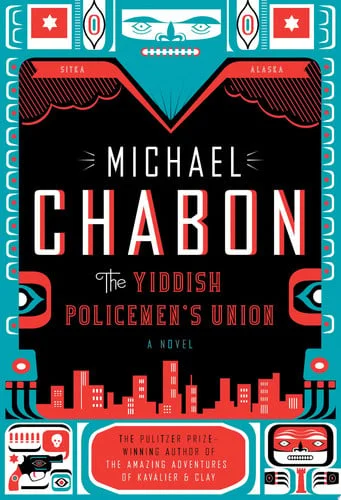
The Yiddish Policemen's Union: A Novel
by Chabon, Michael · 2007
Own this book?
Catalogue it in your own library: where it is shelved, what you paid, who has borrowed it.
Start your libraryAlready have one? Sign in
Description
From Publishers Weekly [Signature]Reviewed by Jess WalterThey are the "frozen Chosen," two million people living, dying and kvetching in Sitka, Alaska, the temporary homeland established for displaced World War II Jews in Chabon's ambitious and entertaining new novel. It is--deep breath now--a murder-mystery speculative-history Jewish-identity noir chess thriller, so perhaps it's no surprise that, in the back half of the book, the moving parts become unwieldy; Chabon is juggling narrative chainsaws here.The novel begins--the same way that Philip Roth launched The Plot Against America--with a fascinating historical footnote: what if, as Franklin Roosevelt proposed on the eve of World War II, a temporary Jewish settlement had been established on the Alaska panhandle? Roosevelt's plan went nowhere, but Chabon runs the idea into the present, back-loading his tale with a haunting history. Israel failed to get a foothold in the Middle East, and since the Sitka solution was only temporary, Alaskan Jews are about to lose their cold homeland. The book's timeless refrain: "It's a strange time to be a Jew."Into this world arrives Chabon's Chandler-ready hero, Meyer Landsman, a drunken rogue cop who wakes in a flophouse to find that one of his neighbors has been murdered. With his half-Tlingit, half-Jewish partner and his sexy-tough boss, who happens also to be his ex-wife, Landsman investigates a fascinating underworld of Orthodox black-hat gangs and crime-lord rabbis. Chabon's "Alyeska" is an act of fearless imagination, more evidence of the soaring talent of his previous genre-blender, the Pulitzer Prize–winning The Amazing Adventures of Kavalier and Clay.Eventually, however, Chabon's homage to noir feels heavy-handed, with too many scenes of snappy tough-guy banter and too much of the kind of elaborate thriller plotting that requires long explanations and offscreen conspiracies.Chabon can certainly write noir--or whatever else he wants; his recent Sherlock Holmes novel, The Final Solution, was lovely, even if the New York Times Book Review sniffed its surprise that the mystery novel would "appeal to the real writer." Should any other snobs mistake Chabon for anything less than a real writer, this book offers new evidence of his peerless storytelling and style. Characters have skin "as pale as a page of commentary" and rough voices "like an onion rolling in a bucket." It's a solid performance that would have been even better with a little more Yiddish and a little less police. (May)Jess Walter was a finalist for the 2006 National Book Award for The Zero and the winner of the 2006 Edgar Award for best novel for Citizen Vince. Copyright © Reed Business Information, a division of Reed Elsevier Inc. All rights reserved.
From The Washington Post Reviewed by Elizabeth McCracken
What sort of writer is Michael Chabon? The question, especially considering his terrific new novel, The Yiddish Policemen's Union, is complicated. Of course he's literary, author of the Pulitzer-winning The Amazing Adventures of Kavalier & Clay and other marvelous books of fiction. His work is page-turning and poignant; he is one of the best writers of English prose alive. But Chabon has an avowed interest in forms considered perhaps less than literary. He's edited two anthologies of pulp-inspired stories for McSweeney's, written a "story of detection" featuring Sherlock Holmes, and he "presents" a comic book quarterly starring one of the superheroes of Kavalier & Clay. He's interested in busting the chains of everydayness that bind many so-called literary writers: He wants to move and thrill us both, and he does.
Reading The Yiddish Policemen's Union is like watching a gifted athlete invent a sport using elements of every other sport there is -- balls, bats, poles, wickets, javelins and saxophones. The book begins with the introduction of a hung-over detective to a gun-shot corpse in a fleabag hotel. Classic noir, except that the detective drinks slivovitz instead of bourbon: He's Jewish, a kind of Philip Marlovsky named Meyer Landsman, though Land
Topics
More by Chabon, Michael
Books credited to Chabon, Michael
Browse similar books