
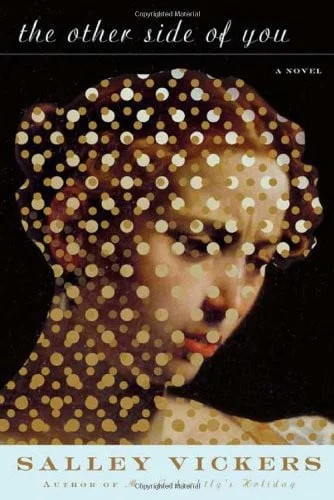
The Other Side of You: A Novel
by Vickers, Salley · 2007
Own this book?
Catalogue it in your own library: where it is shelved, what you paid, who has borrowed it.
Start your libraryAlready have one? Sign in
Description
From Publishers Weekly
In this hypnotic chronicle of quiet desperation, 45-year-old English psychoanalyst David McBride has an intense and personally illuminating session with a suicidal patient that unlocks his own past. His 40-something married-with-children patient, Elizabeth Cruikshank, is silently tormented by her past love for Thomas Carrington, whom, she slowly tells David, she lost track of before her marriage, but met again in Rome as he pursued his passion for Caravaggio. David is not in love with his wife, Olivia, but doesn't much mind: he's emotionally crippled by guilt at the death of his brother in a street-crossing accident (he was five, his brother six). When he hears all of Elizabeth's story, however, something awakens. Vickers (Instances of the Number 3), a psychologist by training, portrays the therapeutic process in all of its messy glory--its imperfections, conflicts and possibilities--and she delivers wrenching conflicts of love within and outside of marriage. Caravaggio's work, in its own right and as symbolic of the role of art, becomes a lovely third theme, though not as richly plumbed as those of love and therapy. (Mar.) Copyright © Reed Business Information, a division of Reed Elsevier Inc. All rights reserved.
From The Washington Post's Book World/washingtonpost.com
Reviewed by Michael Dirda
In Salley Vickers's earlier novel about love and loss, Instances of the Number 3, she wrote: "Some say this is what is meant by the law of karma, a stepping aside from a moment of possibility only to be forever haunted by its unrealised spectre." That Henry Jamesian sense of a missed life -- of what might have been -- suffuses The Other Side of You and reminds us that Vickers is a novelist in the great English tradition of moral seriousness. Her characters suffer, they struggle to be true to both themselves and the promptings of the human heart, and they eventually accept that a quiet accommodation to one's lot may be the most that any of us can hope for. Yet sometimes, during even the most seemingly drab existence, a moment or a memory of real unclouded happiness may be unexpectedly snatched from the maw of time.
The Other Side of You focuses on a period of crisis in the lives of several people, but chiefly the psychiatrist David McBride and the depressed Elizabeth Cruikshank. For no obvious reason, Cruikshank -- an apparently ordinary middle-aged woman, the mother of two grown children -- has attempted to kill herself. As McBride tries to encourage his withdrawn patient to open up and talk, he finds himself thinking more and more about his own death-burdened past. When he was only 5, his 6 1/2-year-old brother was killed before his eyes in a traffic accident. Forty years may have gone by, but for McBride this is still the central event, in some ways the only true event, in his entire life.
The real problem, the good doctor himself realizes, is "not how to cure or be cured but how to live.... The people we were treating were not so much looking for a remedy for anxiety or depression, they were looking for a reason to be alive." McBride soon comes to understand that he and Cruikshank are fundamentally the same. "We are most of us badly cracked and afraid that if we do not guard them with our lives the cracks will show, and show us up, which is why we are all more or less in a state of vigilance against one another." Eventually, Cruikshank does let down her vigilance for a moment but only to murmur a few almost inaudible words: "I was faithless." Not "unfaithful" but "faithless" -- and therein lies the tragedy of her life.
As the now older McBride recalls his patient and this period from his past, we soon realize that there has been some kind of rupture between then and now. But what could it have been? He tells us about his marriage to the sexy, fashion-conscious 42-year-old Olivia, who calls him "darling" and has never wanted children. We learn that he was once in love with Barbara, now the wife of his colleague Dan. He introduces us to his various patients, including a man who is convinced th
Topics
More by Vickers, Salley
Books credited to Vickers, Salley
Browse similar books