
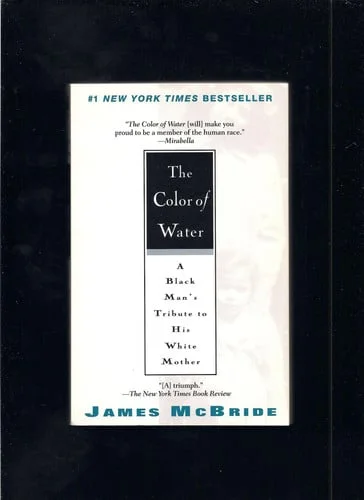
The Color of Water: A Black Man's Tribute to His White Mother
by McBride, James · 1997
Own this book?
Catalogue it in your own library: where it is shelved, what you paid, who has borrowed it.
Start your libraryAlready have one? Sign in
Description
Amazon.com
Order this book... and please don't be put off by its pallid subtitle, A Black Man's Tribute to His White Mother, which doesn't begin to do justice to the utterly unique and moving story contained within. The Color of Water tells the remarkable story of Ruth McBride Jordan, the two good men she married, and the 12 good children she raised. Jordan, born Rachel Shilsky, a Polish Jew, immigrated to America soon after birth; as an adult she moved to New York City, leaving her family and faith behind in Virginia. Jordan met and married a black man, making her isolation even more profound. The book is a success story, a testament to one woman's true heart, solid values, and indomitable will. Ruth Jordan battled not only racism but also poverty to raise her children and, despite being sorely tested, never wavered. In telling her story--along with her son's--The Color of Water addresses racial identity with compassion, insight, and realism. It is, in a word, inspiring, and you will finish it with unalloyed admiration for a flawed but remarkable individual. And, perhaps, a little more faith in us all.
From Library Journal
Like Gregory Williams's Life on the Color Line (LJ 2/1/95), these two memoirs describe growing up interracial from the perspective of the sons of African American fathers and white mothers. McBride, an accomplished journalist and musician, has viewed the yawning chasm of racial division from both sides and, despite carving out a successful life, has been scarred. Unlike Williams and Minerbrook, though, he focuses on a single, singular parent, a rabbi's daughter who later helped her husband establish an all-black Baptist church in her home and saw 12 children through college. His mother's own story, juxtaposed with McBride's, helps make this book a standout. Recommended for all collections. Minerbrook's father came from Chicago's African American high society, his mother from rural Missouri. He paints a detailed portrait of their family life, of relationships complicated by the fact that "human emotions, when mixed with racial issues, are prone to shatter like glass." Nearing middle age, he seeks out the white side of his family, who have rejected his mother and her offspring, and achieves a well-deserved catharsis. Still, his accounts of the almost unrelenting prejudice of white against black, black against white, light-skinned black against dark-skinned black, and so on are deeply disturbing. One is left to borrow the words of another recent commentator and say that this cancer does indeed make me want to holler. Highly recommended. -?Jim Burns, Ottumwa P.L., Ia. Copyright 1996 Reed Business Information, Inc. --This text refers to the
Hardcover edition.