
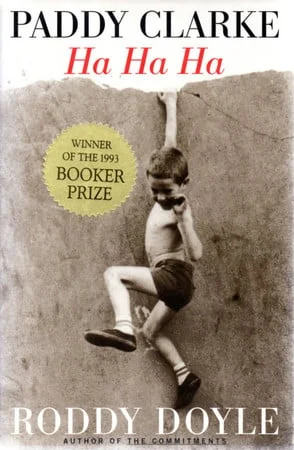
Paddy Clarke Ha Ha Ha
by Doyle, Roddy · 1994
Own this book?
Catalogue it in your own library: where it is shelved, what you paid, who has borrowed it.
Start your libraryAlready have one? Sign in
Description
Amazon.com
In Roddy Doyle's Booker Prize-winning novel Paddy Clarke Ha Ha Ha, an Irish lad named Paddy rampages through the streets of Barrytown with a pack of like-minded hooligans, playing cowboys and Indians, etching their names in wet concrete, and setting fires. Roddy Doyle has captured the sensations and speech patterns of preadolescents with consummate skill, and managed to do so without resorting to sentimentality. Paddy Clarke and his friends are not bad boys; they're just a little bit restless. They're always taking sides, bullying each other, and secretly wishing they didn't have to. All they want is for something--anything--to happen.
Throughout the novel, Paddy teeters on the nervous verge of adolescence. In one scene, Paddy tries to make his little brother's hot water bottle explode, but gives up after stomping on it just one time: "I jumped on Sinbad's bottle. Nothing happened. I didn't do it again. Sometimes when nothing happened it was really getting ready to happen." Paddy Clarke senses that his world is about to change forever--and not necessarily for the better. When he realizes that his parents' marriage is falling apart, Paddy stays up all night listening, half-believing that his vigil will ward off further fighting. It doesn't work, but it is sweet and sad that he believes it might. Paddy's logic may be fuzzy, but his heart is in the right place. --Jill Marquis --This text refers to the
Paperback edition.
From Publishers Weekly
Winning the 1993 Booker Prize propelled Doyle's fourth novel from its original spring publication to a December issue date. While retaining the candid pictures of family life, the swift, energetic prose, the ear-perfect vernacular dialogue and the slap-dash humor that distinguished The Van, The Snapper and The Commitments, this narrative has more poignance and resonance. Set in the working-class environment of an Irish town in the late 1960s, the story is related by bright, sensitive 10-year-old Paddy Clarke, who, when we first meet him, is merely concerned with being as tough as his peers. Paddy and his best friend Kevin are part of a neighborhood gang that sets fires in vacant buildings, routinely teases and abuses younger kids and plays in forbidden places. In episodic fashion, Doyle conveys the activities, taboos and ceremonies, the daring glee and often distorted sense of the world of boys verging on adolescence. As Paddy becomes aware that his parents' marriage is disintegrating, Doyle's control of his protagonist's voice remains unerring, and the gradual transition of Paddy's thoughts from the hurly-burly of play and pranks to a growing fear and misery about his father's alcoholic and abusive behavior is masterfully realized. While some topical references may bewilder readers unfamiliar with life in Ireland, other background details--the portrayal of small-town society, of the strict teacher who shows sudden empathy for Paddy--have universal interest. Most notable, however, is the emotional fidelity with which Doyle conveys Paddy's anguished reaction to the breakup of his family. Copyright 1993 Reed Business Information, Inc.
Topics
More by Doyle, Roddy
Books credited to Doyle, Roddy
Browse similar books