
Happiness, As Such
by Ginzburg, Natalia, Proctor, Minna · 2019
Own this book?
Catalogue it in your own library: where it is shelved, what you paid, who has borrowed it.
Start your libraryAlready have one? Sign in
Description
The hauntingly beautiful epistolary novel from "a glowing light of modern Italian literature" (New York Times Book Review)
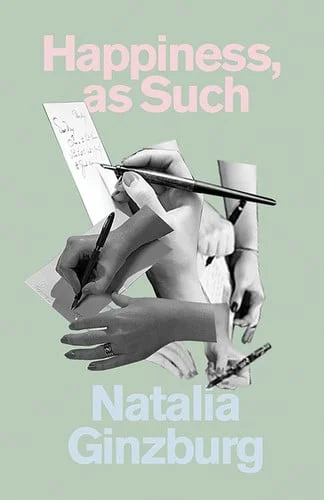
At the heart of Happiness, as Such is an absenceâan abyss that pulls everyone to its brinkâcreated by a family's only son, Michele, who has fled from Italy to England to escape the dangers and threats of his radical political ties. This novel is part epistolary: his mother writes letters to him, nagging him; his sister Angelica writes, missing him; so does Mara, his former lover, telling him about the birth of her son who may be his own. Left to clean up Michele's mess, his family and friends complain, commiserate, tease, and grieve, struggling valiantly with the small and large calamities of their interconnected lives.
Natalia Ginzburg's most beloved book in Italy and one of her finest achievements, Happiness, as Such is an original, wise, raw, comic novel that cuts to the bone.
Editorial Reviews
Review
"Happiness, As Such is a tragicomedy of manners about an Italian family whose only son flees the country after being persecuted for his political activism. Published in Italy in 1973, it's primarily a series of letters between the estranged son and his friends and family back home. If that sounds uneventful, rest assured it's just as compelling as The Dry Heart." - Chicago Tribune
"The web of connections between private and public life, between the intellectual and the emotional and the political, is delicately visible, only occasionally breaking the surface." - Lidija Haas, Harper's
"A deliciously arid novel." - Interview Magazine
"A swiftly moving blend of dialogue and letters, the novel speaks to Ginzburg's remarkable range as a writer: beneath the currents of humor and wit is a subtle work of insight and feeling. Another masterpiece from one of the finest postwar Italian writers." - Kirkus (starred)
"Ginzburg writes with humor and pathos. Epistolary, family exposes each to the other and we soon recognize that happiness is defined as mundane visitations, daily routines, and reactivated memory of joy as seen through loss." - Lucy Kogler, Lit Hub
""The voice is instantly, almost violently recognizable â aloof, amused and melancholy. The metaphors are sparse and ordinary; the language plain, but every word load-bearing. Short sentences detonate into scenes of shocking cruelty. Even in middling translations, it is a style that cannot be subsumed; Natalia Ginzburg can only sound like herself."" - Parul Sehgal, New York Times
"Magnificent...This is a riveting story about how even when a family drifts apart, the bonds of blood relations supercede the deepest disagreements." - Publishers Weekly
""Magnificent...This is a riveting story about how even when a family drifts apart, the bonds of blood relations supercede the deepest disagreements."" - Publishers Weekly (starred review)
""Candor and lies, love and exasperation, farce and inconsolable grief are seamlessly compounded in this very funny and deeply melancholy book. After devastating loss, which is to be feared more greatlyâthat nothing will ever be the same, or that many things will be more or less the same? Life goes on, all too recognizably. "You can get used to anything when there's nothing else left," says one of the characters toward the end."" - Deborah Eisenberg, The New York Review of Books
"A wonderful act of virtuosity." - Joan Acocella, The New Yorker