
Crabwalk
by Grass, Gunter, Winston, Krishna · 2003
Own this book?
Catalogue it in your own library: where it is shelved, what you paid, who has borrowed it.
Start your libraryAlready have one? Sign in
Description
From Publishers Weekly
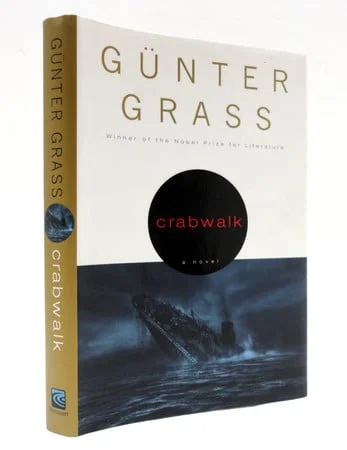
In a novel that has already attracted attention on both sides of the Atlantic, Nobelist Grass (Too Far Afield) employs a compelling vehicle for his latest excursion into Germany's tortured past. The Wilhelm Gustloff was a Nazi cruise ship refitted to rescue German refugees from the approaching Russian army in the waning days of WWII. The vessel was torpedoed by a Russian sub in the Baltic Sea, resulting in the deaths of 9,000 people and becoming the largest maritime disaster of the 20th century. Grass's unlikely narrator is second-rate journalist Paul Pokriefke, whose mother gave birth to him while the ship was collapsing. Pokriefke's irreverent narrative, couched in colloquial language, moves back and forth through the history of the incident, starting with the story of Gustloff, a Nazi functionary who was shot in 1936 by a Jewish medical student named David Frankfurter. Grass also weaves in details about the Russian sub commander, Aleksandr Marinesko, but the decidedly modern touch is the inclusion of Pokriefke's son, Konrad, an unbalanced loner who becomes deeply involved with the Web site dedicated to commemorating Gustloff's "martyrdom" and the vessel Hitler named after him. Though the elliptical narration and multiple subplots intentionally impede dramatic momentum, this is one of Grass's most accessible novels, and the closing chapters about the rescue of Pokriefke's mother are simply riveting. The final irony is the fate of Konrad, who, in search of revenge, goes after a man posing as Frankenfurter on the Web site. Grass has covered many of these issues in earlier novels, but this time he addresses the suffering of German civilians during and after the conflict. A writer who refuses to avert his eyes from unpleasant truths, he remains an eloquent explorer of his country's troubled 20th-century history. Copyright 2003 Reed Business Information, Inc.
From Library Journal
In 1945, a Soviet submarine sunk the German refugee ship Wilhelm Gustoff, resulting in 9000 deaths-the worst maritime disaster ever. Grass here reimagines not just the event but the consequences for postwar Germany. Copyright 2002 Reed Business Information, Inc.
Topics
Browse similar books