
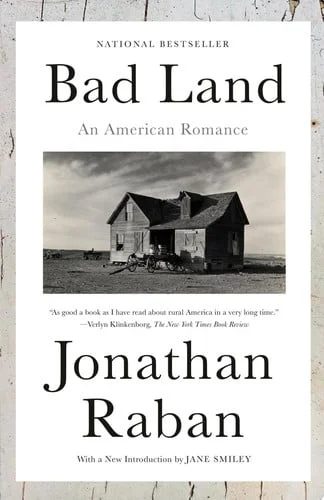
Bad Land: An American Romance
by Raban, Jonathan · 1997
Own this book?
Catalogue it in your own library: where it is shelved, what you paid, who has borrowed it.
Start your libraryAlready have one? Sign in
Description
Amazon.com
Jonathan Raban ambles and picks his way across the Montana prairie, called "The Great American Desert" until Congress offered 320-acre tracts of barren land to immigrants with stardust in their eyes. Raban's prose makes love to the waves of land, red dirt roads, and skeletons of homesteads that couldn't survive the Dirty Thirties. As poignant as any romance novel, there's heartbreak in the failed dreams of the homesteaders, a pang of destiny in the arbitrary way railroad towns were thrown into existence, and inspiration in the heroism of people who've fashioned lives for themselves by cobbling together homes from the ruined houses of those who couldn't make it. Through it all, Raban's voice examines and honors the vast open expanses of land and pays homage to the histories of families who eked out an existence.
From Publishers Weekly
Raban (Old Glory), an Englishman now settled in Seattle, has written a vivid and utterly idiosyncratic social history of the homesteading movement in eastern Montana that went boom and bust during the first three decades of this century. It is the story of a dream turned sour that still echoes in the western American consciousness. Lured by free land from the government and a deceptive publicity campaign mounted by the local railroad, thousands from all over the eastern United States and northern Europe went to Montana to make their fortune as farmers. Raban follows the stories of several families, most of which end in heartbreak. He examines the literature that lured them there and the how-to books they read once they arrived. He tells the story of an early photographer, a woman, who recorded life on the prairie. He covers the weather, the homegrown school system, the early bankrupting fad of replacing horses with tractors, a Depression-era town built by the WPA and?most recently?the failed attempt of the dying community of Ismay to revive itself by changing its name to Joe, Montana, in the vain hope of luring football fans. Raban combines his personal experiences during the two years he traveled in Montana with historical research to argue that, given the land and the weather, the homesteading scheme was doomed to failure. The legacy today, seen most dramatically in the anti-government militia movement, is the belief, rooted in family memory, that government and big business conspire together against the little folk. This seemingly informal yet careful blend of chronicle and personal reportage is social history at its best. Copyright 1996 Reed Business Information, Inc. --This text refers to an out of print or unavailable edition of this title.
Topics
Browse similar books