
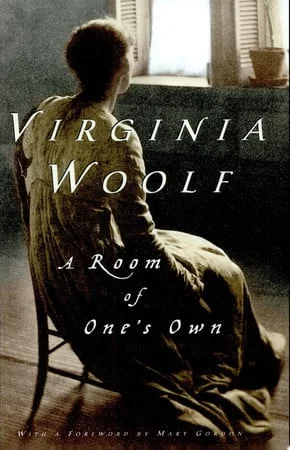
A Room of One's Own
by Woolf, Virginia, Gordon, Mary (Foreword by) · 1989
Own this book?
Catalogue it in your own library: where it is shelved, what you paid, who has borrowed it.
Start your libraryAlready have one? Sign in
Description
Book Description
Virginia Woolf's landmark inquiry into women's role in society
In A Room of One's Own, Virginia Woolf imagines that Shakespeare had a sister-a sister equal to Shakespeare in talent, and equal in genius, but whose legacy is radically different. This imaginary woman never writes a word and dies by her own hand, her genius unexpressed. If only she had found the means to create, argues Woolf, she would have reached the same heights as her immortal sibling. In this classic essay, she takes on the establishment, using her gift of language to dissect the world around her and give voice to those who are without. Her message is a simple one: women must have a fixed income and a room of their own in order to have the freedom to create.
Editorial Reviews
Amazon.com Review Surprisingly, this long essay about society and art and sexism is one of Woolf's most accessible works. Woolf, a major modernist writer and critic, takes us on an erudite yet conversational--and completely entertaining--walk around the history of women in writing, smoothly comparing the architecture of sentences by the likes of William Shakespeare and Jane Austen, all the while lampooning the chauvinistic state of university education in the England of her day. When she concluded that to achieve their full greatness as writers women will need a solid income and a privacy, Woolf pretty much invented modern feminist criticism.
Review Surprisingly, this long essay about society and art and sexism is one of Woolf's most accessible works. Woolf, a major modernist writer and critic, takes us on an erudite yet conversational--and completely entertaining--walk around the history of women in writing, smoothly comparing the architecture of sentences by the likes of William Shakespeare and Jane Austen, all the while lampooning the chauvinistic state of university education in the England of her day. When she concluded that to achieve their full greatness as writers women will need a solid income and a privacy, Woolf pretty much invented modern feminist criticism. (Amazon.com Review )
Essay by Virginia Woolf, published in 1929. The work was based on two lectures given by the author in 1928 at Newnham College and Girton College, Cambridge. Woolf addressed the status of women, and women artists in particular, in this famous essay which asserts that a woman must have money and a room of her own if she is to write. Woolf celebrates the work of women writers, including Jane Austen, George Eliot, and the Brontes. In the final section Woolf suggests that great minds are androgynous. She argues that intellectual freedom requires financial freedom, and she entreats her audience to write not only fiction but poetry, criticism, and scholarly works as well. The essay, written in lively, graceful prose, displays the same impressive descriptive powers evident in Woolf's novels and reflects her compelling conversational style. (The Merriam-Webster Encyclopedia of Literature )
Topics
More by Woolf, Virginia
Books credited to Woolf, Virginia
Browse similar books