
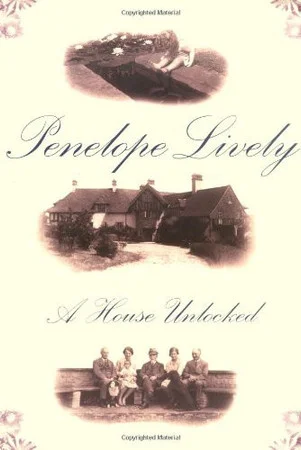
A House Unlocked
by Lively, Penelope · 2002
Own this book?
Catalogue it in your own library: where it is shelved, what you paid, who has borrowed it.
Start your libraryAlready have one? Sign in
Description
From Publishers Weekly
Using "the furnishings of a house as a mnemonic system," Lively (Moon Tiger) takes readers on an imaginary tour of Golsoncott, the Edwardian country house her grandparents bought in 1923, home to several generations of her family. She recalls the gong stand in the entryway (a symbol of "vanished rituals" calling the family to its meals) and her grandmother's intricately worked sampler, with its row of "skinnies" (representing evacuated children boarding at Golsoncott during WWII) just a few of the many objects that "spun a shining thread of reference" to another era and way of life. In this combination personal/social history, Lively tells of how even the layout of the rooms spoke to changes in thinking over the course of the century. Children were quartered in a nursery wing, far from the adults, not at the center of household life as they are today. Grandfather had his dressing-room separate from grandmother's bedroom; the gender divide in the early 20th century was not a "distinction" so much as a "chasm." Surrounding the house were its gardens, reflecting in their botanical variety the progress of British colonial expansion and commercial enterprise. Family photos with the names of the dogs and horses penciled in recall riding's role in country life and inspire a digression on the history of foxhunting. Despite all this, Lively unlocks more than the house and its century; the author herself is here, a product of both her corseted grandmother and the more modern eras that followed. This is a quietly intelligent, oddly soothing meditation on modernity. (Apr.)Forecast: Fans of Lively's Booker Prize and Whitbread Award-winning novels, Anglophiles, memoir readers and students of material culture will gravitate toward this. Copyright 2002 Cahners Business Information, Inc.
From Library Journal
Whitbread Award and Booker Prize-winning novelist Lively's latest book is a mixture of autobiography and social history. The house in question is Lively's ancestral home Golsoncott in Somerset, England, acquired by her grandparents in 1923. In 1995, when the house had to be disposed of, its familiar objects spoke elegiacally of a way of life that had changed in the intervening years. The figures on the embroidered sampler, for instance, recorded the effect of historical events like the Blitz, the Russian Revolution, and the Holocaust on the inhabitants of Golsoncott; the potted meat jars served as a mnemonic for the state of the Church; and the bon bon dish evoked a social class served by domestic servants. Lively's writing is a palimpsest of past and present on which flit scenes of England's changing mores and rituals. Add to this a narrative graced with fictional elements and felicitous prose and the result is, to borrow Lively's own phrase, "a rattling good read," as absorbing as any of her novels. Highly recommended for all libraries. Ravi Shenoy, Naperville P.L., IL Copyright 2002 Cahners Business Information, Inc.
Topics
More by Lively, Penelope
Books credited to Lively, Penelope